Catalogue and search demand
We group searches by type of test and the names patients use. We distinguish specialties, individual services and preparation guides, and remove confusion from the catalogue.
 ilinseo.ruGet in touch
We promote diagnostic centres and laboratories by test and service. We develop pages for MRI, CT, ultrasound, lab tests and other services, connecting them to locations and booking. The centre’s specialists confirm current terms and preparation guidance.
Discuss your needs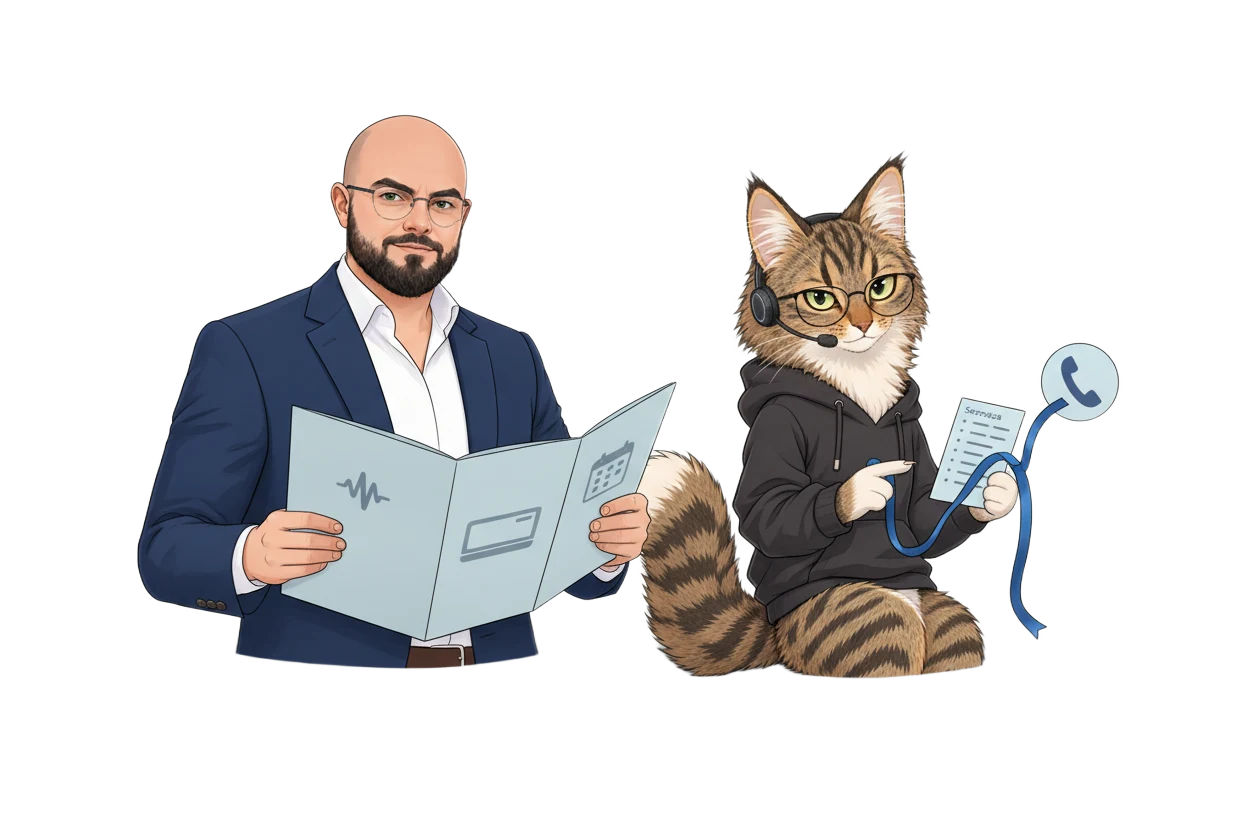
There may be many tests. Patients need a clear path through the catalogue.Marcel, a site character
We group searches by type of test and the names patients use. We distinguish specialties, individual services and preparation guides, and remove confusion from the catalogue.
We add what the service includes, the centre’s price and booking instructions. Preparation, limitations and descriptions of results are reviewed by medical specialists.
We establish which tests are available at each address and connect pages to contacts, branch listings and current booking options.
We fix technical issues, develop SEO and check the mobile catalogue. Using available data, we assess page visits, calls, enquiries and bookings for specific tests.
An agreed plan, implementation and a report on completed work and changes in the metrics.
The catalogue makes the right test hard to find, and the page does not explain the price, preparation or available location. Patients contact a branch that does not offer the service, leaving reception to clarify everything again.
For diagnostic centres, laboratories and clinics with diagnostic departments.
Sergey Ilyin founded SEOTIKA.ru. Public projects from the agency show examples of work on medical websites.
Patients need to find the right test, understand its conditions and choose an available location. For the centre, the catalogue, branches and booking form one connected structure.
We gather searches by specialty, test type and the names patients use. We check the relationship between a general category, a specific service and preparation. For example, an ultrasound category and an individual test should be connected without duplicating all their content.
For laboratory tests, we consider what is included, the result format and conditions provided by the laboratory. We create a separate page where it addresses a distinct need and sufficient information is available, not for every variation of a search phrase.
We clarify what a test includes, the centre’s price, how to book and how to receive results. Specialists confirm preparation, contraindications and limitations. The information should not encourage people to interpret results or order tests on their own.
If conditions differ, such as a test with an additional stage, we explain them using verified information. We include outdated instructions and prices in regular content checks.
We establish where particular equipment or tests are available and link the page to the centre’s address, contacts and listing. Where branches differ, we do not publish identical conditions for the entire network.
We check mobile navigation and the path to booking. Connection to a schedule depends on the centre’s systems; integration is assessed separately before implementation. Where data permits, analytics distinguish an enquiry, a confirmed time and a completed appointment.
Scroll the table right to view all three columns.
| Situation | What we do | What we check |
|---|---|---|
| The catalogue is difficult to use | Separate specialties from specific tests | A clear structure and navigation. |
| The service is not available at every branch | Connect the test to actual locations | The correct booking location. |
| Preparation information and prices are outdated | Check the information with specialists | Updated test details. |
The main format is ongoing support on a retainer. I lead the strategy and oversee implementation; my own team carries out the work.
We begin by agreeing priorities and access. We then implement the plan, check changes and review results. We count enquiries and bookings separately where clinic data is available.
How ongoing support worksWe check clinic and branch listings: addresses, services, doctors and booking options. I select platforms based on the clinic’s needs, not the length of a list.
Sergey Ilyin
Not automatically. We look at differences in demand, conditions and content, and combine related topics if separate pages would repeat the same information.
Yes. We account for equipment and services at each address, connect the catalogue to actual branches and separate their data where the available systems allow.
The team helps present the material, but medical instructions and limitations are approved by the centre’s specialists. Search content does not replace a doctor’s individual instructions.
That depends on the centre’s system and available integrations. We assess this separately and agree on the development scope; an enquiry form alone does not confirm a test time.
Tell us about your clinic, city and priority services. We'll discuss the current situation and the scope of work.

